segunda-feira, 18 de fevereiro de 2013

Another venom extraction method... from a curious source!

I really loved this one.

http://www.sciencedirect.com/science/article/pii/S0041010104001795
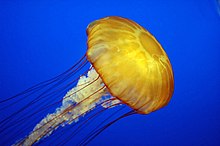

Maybe one day I will also experiment with this venom? These weird animals are quite nasty sometimes!..

segunda-feira, 21 de janeiro de 2013

Fire ant venom extraction method published

Dear readers and passersby!

I am proud to announce that the latest paper describing a new method for extracting fire ant venom has been published. I am afraid access is open only to academic researchers -- the .pdf can be downloaded for free HERE.

Well, basically all one has to do it to collect a fire ant nest, get the ants out, and dip them into a mixture of two solvents. Apolar solvent will hold venom alkaloids (LOTS OF IT) and water will hold venom proteins and peptides (VERY TOXIC). Now you have only to find ways of evaporating these liquids safely and store the venom.

Easy and quick, if you are not afraid of manipulating a whole horde of angry fire ants. At least workers cannot fly! I must warn you that the venom components are dangerous, and should be handled with great care. The concentrated mixture looks very much like snake venom.

Not for evil purposes!! Have fun and give me some feed back, please.

A demonstrative video can be downloaded from here. It can be viewed below:


quinta-feira, 15 de novembro de 2012

FIRE ANT MARKETING

Man, this is sooo typical American Merchandise... thought it worth posting.


segunda-feira, 12 de novembro de 2012

Fire ants and butterflies

The video below is about something so beautiful about fire ants that I was compelled to share. This is the product of an amazing study by other Brazilian colleagues working with Solenopsis saevissima. Watch and learn!


The background study behind this can be found here

domingo, 4 de novembro de 2012

Some facts about French Guyana

Since French Guyana is such an exotic place and not many people I know have seriously considered the possibility of going there, I will add further notes on the place, and try to encourage others to know the area.

As soon as your airplane approaches the airport at Cayenne, you realise the forest is indeed untouched by the French government: the horizon is an undulating green mesh of foliage, and the abundant trees and bogs stop flush to the fence by the landing lane. Practically no buildings or clearings to be seen. This is something maybe my Brazilian comrades ought to see as to realise the kind of result one expects from environmental protection measures.
Temperature is always hot, the air always heavy from high humidity, mosquitoes are everywhere near the vegetation or around you after 6 pm. You get to see Chinese, French, Haitians, Brazilians, Dominicans, and eventually even other peoples populating the streets. A few buildings, and beyond those, only the jungle or water. I particularly found the Haitians the most sympathetic people around to chat with, really nice chaps.

This is a very large tree at Montaigne des Singes (sorry could not rotate image)
Each city is quite far from each other, taking a 40-60mins drive to get somewhere else. The highways are in good state, though quite narrow and empty -- this further accounts for the good conservation of local nature. Practically nothing is produced locally at French Guyana, what also accounts for great nature... and awfully high prices. You will easily pay 8 euros for 500g of raw meat, or some ordinary fish, to take home. Local radio plays French songs, some American dance music, and a lot of Brazilian tunes (not exactly the best one in my opinion). TV offers little variety, local programs are not too good, and many stick to channels from France.
In a few words: it is a colony. An authentic, wild, overseas colony of the 21st century.


Typical house at Bourg, in Kourou
I definitely recommend visiting French Guyana, especially if you are a nature/adventure addict. And a nice piece of information to any scientists: there is no need for permits to collect and study local specimens, which include great rainforest insects, amazing snakes and birds, and all sorts of weird plants you can think of. Considering one almost gets lynched in my country just from attempting to collect beetles as one's hobby, this is indeed fantastic.

The beach at Kourou
Another curiosity about the place: French Guyana holds one of the main international stations for launching satellites and missiles -- thus you get the chance to watch a rocket making into space from inside your tent in the middle of tall jungle. I certainly plan to do this next time I stay there, if I get the chance!

terça-feira, 25 de setembro de 2012

Adventurous French Guyana

I am very sorry for being away for so long. I will be posting some personal impressions and comments on some of my latest trips... and on ants I have seen! I will start with French Guyana. I spent 10 days there after fire ants, Solenopsis saevissima. The little bastards almost killed me. I thought Brazilian fire ants (including S. invicta most readers here know) were nasty enough -- well, I had not yet met the fire ants in Guyana. They are larger, faster, redder (if there is such a word), and angrier!! Their underground nests (mounds are small because of the soil quality) undoubtedly stem directly from Hell: once you touch them, a surge of red-hot walking needles bursts straight for you. And they know how to get around any protection you have. I will give you the general idea below. 


This is one of the places in where I could find many nests. As you can see, there are no visible mounds. You step on a nest and you will soon realize it -- nice and gentle!


 A glimpse on the pesky things. I will illustrate them further in following posts. As I said, quite reddish, actually rather orange in colour. They were nasty!


This is outcome of my first day in the field. Disgusting and uncomfortable, to say the least. Situation got worst with passing days, no matter what protections I wore.

sexta-feira, 24 de agosto de 2012

Yay! New published paper!

It was difficult in all stages, and did not come out 100% the way I think it should, but hell yeah, I am very happy with it!


Dos Santos Pinto, J.R.A., Fox, E.G.P., Saidemberg, D.M., Santos, L.D., Da Silva Menegasso, A.R., Costa-Manso, E., MacHado, E.A., Bueno, O.C., Palma, M.S., 2012. Proteomic view of the venom from the fire ant Solenopsis invicta Buren. J. Proteome Res. 11, 4643–4653. https://doi.org/10.1021/pr300451g


http://cen.acs.org/articles/90/web/2012/08/Proteins-Revealed-Fire-Ant-Venom.html

Any comments are welcome!!